



Calving flips a switch in a cow’s body. One moment she’s dry, the next she’s cranking out milk — and that sudden demand hits hard. Calcium requirements shoot through the roof, her energy needs outpace intake, and she loses gallons of fluid during delivery. Put all of that together and you’ve got the perfect setup for two common headaches: milk fever and ketosis.
The kicker? These problems don’t just show up in obvious “down cow” cases. Subclinical forms quietly chip away at performance, reproduction, and immunity, often setting cows up for a tough lactation or early culling. Even if you don’t see the signs, the financial drag is real.
Why the First Few Weeks Matter
Calving itself is over in hours, but the transition period that follows determines the success of her entire lactation. If she stumbles in those early days — whether from low calcium, energy deficits, or poor appetite — it’s hard to ever make up the ground.
Short-term metabolic stress translates into long-term problems like:
-
Lower peak milk and shorter persistency
-
Higher cull risk
-
Weaker reproductive performance
-
Increased vulnerability to diseases like mastitis or metritis
Bottom line: early prevention pays back for months.
Milk Fever: Not What the Name Suggests
Despite the name, milk fever isn’t an infection and there’s no actual fever. It’s straight-up hypocalcemia — blood calcium dropping below the 7.5 mg/dL threshold needed for normal muscle and nerve function.
When lactation kicks in, calcium demand skyrockets. If the cow’s body isn’t primed to mobilize it fast enough, she crashes. Clinical milk fever looks like:
-
Muscle tremors
-
Cold ears
-
Stumbling or inability to rise
-
Down cow, head tucked, eyes dull
That’s the severe version requiring IV calcium. But here’s the catch: subclinical cases are way more common and costly. Up to 50% of older cows deal with low calcium after calving. They eat less, and that opens the door to displaced abomasum, retained placenta, ketosis, and more.
Hormones: The Three-Way Balancing Act
Calcium regulation is controlled by parathyroid hormone (PTH), calcitonin, and vitamin D. PTH frees calcium from bone when blood levels dip. Calcitonin does the opposite, pushing calcium into storage. Vitamin D helps absorb and mobilize it, but only once it’s converted to its active form, 1,25-dihydroxycholecalciferol, through the kidneys.
Here’s the problem: this hormonal adjustment takes time. In the first five days post-calving, calcitonin is still active, PTH hasn’t fully ramped up, and that gap is when milk fever strikes hardest.
Why Feeding Less Calcium Pre-Calving Works
It feels backward, but low-calcium diets before calving are the best prevention tool.
Feeding around 80 g of calcium and 60 g of phosphorus per day for the last 30 days prepartum forces PTH to start working early. That “training” makes the cow ready to pull calcium from her bones when milk demand hits.
Without that priming, she’s slow to respond, blood calcium crashes, and milk fever shows up.
Practical tip: Skip high-calcium forages like alfalfa in the close-up pen. Stick with straw, grass hay, or other low-calcium rations.
Don’t Overlook Dehydration
Here’s something many producers miss: calving drains a cow’s fluids big time. Along with the calf, she loses amniotic fluid, placental membranes, fetal urine, and blood. Delivering a 100-lb calf can mean over 10 gallons of fluid gone in one shot.
That kind of dehydration:
-
Reduces appetite and water intake
-
Slows rumen function
-
Delays the switch onto lactation rations
-
Raises the risk of both milk fever and ketosis
If she’s not eating and drinking aggressively after calving, she’s not bouncing back.
Ketosis: The Energy Spiral
While milk fever starts with calcium, ketosis starts with energy.
When feed intake lags behind energy demand, the cow mobilizes fat for fuel. That process releases ketones like beta-hydroxybutyrate and acetone. Trouble is, ketones suppress appetite — which makes her eat less — which creates more ketones.
That’s the negative energy spiral in action. Many cases are subclinical, but they still lead to:
-
Lower milk production
-
Delayed breeding
-
Higher cull rates
And yes, ketosis often follows milk fever, but it can also happen independently if intake falls off.
A More Complete Approach: Start Strong™ for Fresh Cows
Most herds use a calcium bolus at calving, which helps in the moment but doesn’t cover the bigger picture. Boluses provide calcium, but don’t train the hormonal system, don’t fix dehydration, and don’t address the five-day metabolic lag.
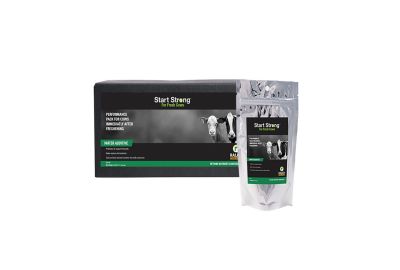
That’s why Ralco developed Start Strong™ — a more holistic solution that tackles all three pressure points: calcium, energy, and hydration.
1. Milk Fever: Calcium Support That Sticks
-
Balanced electrolytes (calcium, magnesium, sodium, potassium) to aid absorption and nerve/muscle function.
-
Delivered in an isotonic solution to improve hydration and rumen motility.
-
Extends the cow’s ability to handle imbalance during the critical five-day window.
2. Ketosis: Stop the Spiral Early
-
Dextrose for quick energy.
-
B-vitamins (niacin, riboflavin, thiamine) to power the Krebs cycle.
-
Microbial Catalyst® cobalt technology to boost rumen fermentation of fibrous feeds, producing more propionate — a precursor for glucose.
-
Cobalt and B12 as key cofactors in gluconeogenesis, directly reducing ketone buildup.
3. Dehydration: Refill the Tank
-
Isotonic formula replenishes fluids, electrolytes, and energy.
-
Encourages appetite and water intake after calving stress.
-
Can be given as a drink or an oral drench if she won’t drink on her own.
More Than a Bolus — A Safety Net
Start Strong isn’t just another supplement. It’s a metabolic safety net that supports calcium balance, hydration, and energy recovery exactly when cows need it most.
One or two doses can stabilize intake, shorten recovery, and set cows up for a stronger lactation.
How to Use:
-
Mix one 1-lb package in 5 gallons (20 liters) of lukewarm water.
-
Offer immediately after calving as a drink.
-
If she won’t drink, administer via drench.
-
A second dose 12–24 hours later helps with sluggish or higher-risk cows.
Takeaway: Milk fever and ketosis aren’t just “fresh cow problems.” They’re preventable, and prevention is always cheaper than treatment. By addressing calcium, energy, and hydration together, you protect fresh cows from stumbling at the most critical stage of their lactation.
![Start Strong for Fresh Cows [1lb]](https://preprod.armoranimalhealth.com/media/catalog/product/cache/6e07d0e8b94185af26caa986d2b4aaa2/_/s/_s_t_start_strong_1lb.jpg)

![Start Strong for Fresh Cows [50 lb.]](https://preprod.armoranimalhealth.com/media/catalog/product/cache/6e07d0e8b94185af26caa986d2b4aaa2/_/s/_s_t_start_strong_for_fresh_cows.jpg)

